
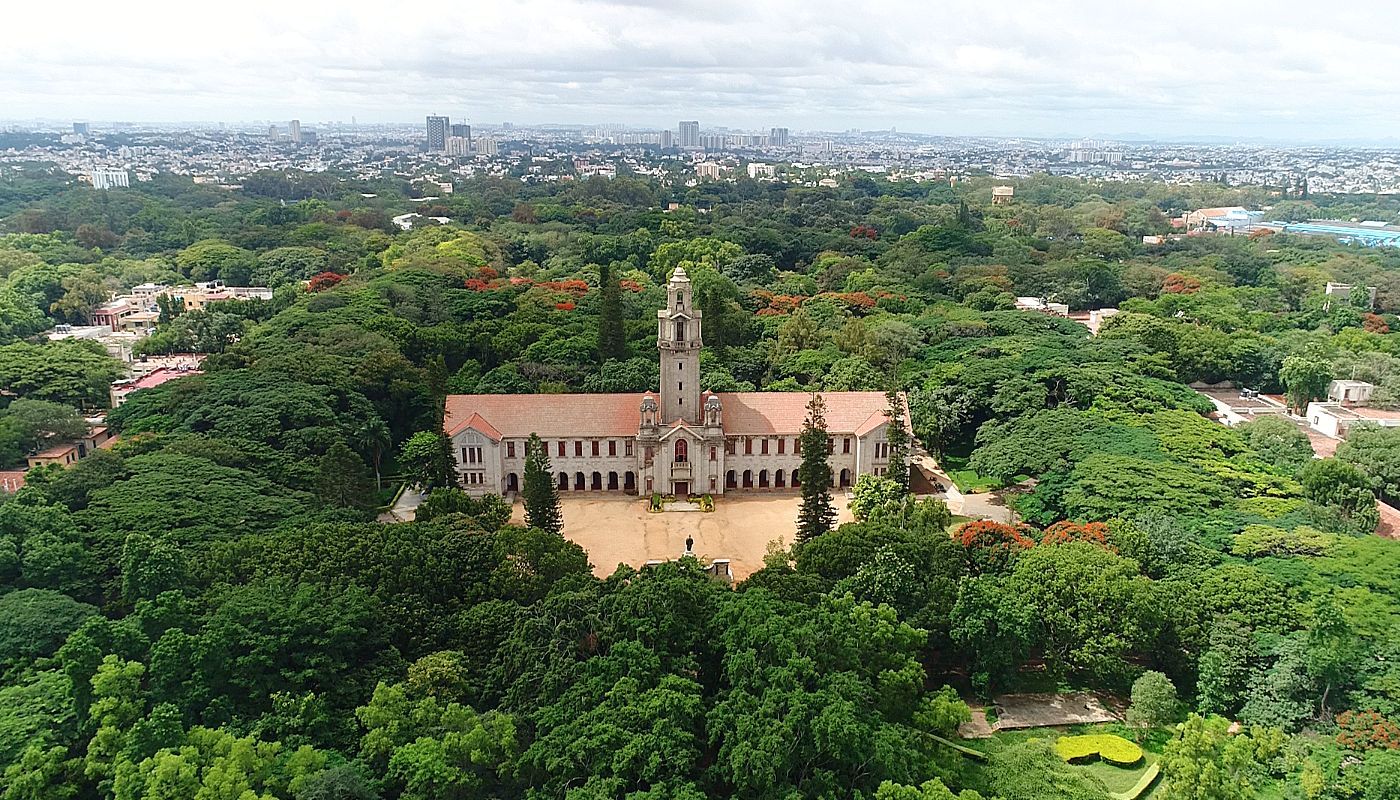
Welcome to the Fifth International Symposium on the Tsetlin Machine
Indian Institute of Science, Bangalore, 12-14 October, 2026
Beyond Deep Learning: Interpretable, Energy-Efficient AI
Artificial intelligence has achieved remarkable success in recent years, yet its limitations become clear as we move from controlled benchmarks to complex, real-world environments. Today’s deep learning systems often struggle with incomplete, noisy, and ambiguous data, while their rapidly growing energy demands raise serious concerns about sustainability and global accessibility.
ISTM 2026 highlights a fundamentally different path forward with Tsetlin Machines, an interpretable, logic-based AI paradigm that replaces black-box models with human-readable rules. This approach combines transparency with strong learning capability, enabling systems that can reason about their decisions while scaling to large, high-dimensional, real-world problems.
With a dramatically lower energy footprint and robust performance in challenging settings, Tsetlin Machines offer a compelling foundation for practical, trustworthy AI, and a promising route toward more general, adaptable intelligence.
Join researchers and practitioners at IISc Bangalore to explore this emerging paradigm and its potential to reshape the future of AI.
ISTM – Premier Symposia Series
International Symposium on the Tsetlin Machine (ISTM) is a premier international symposia series which provides a high-quality networking and dissemination platform for emerging machine learning systems research and development, including the Tsetlin machine. This specialist series covers a wide variety of topics, ranging from software algorithms, data science to hardware accelerator designs. Check the Call for Papers for more details.
This year ISTM is taking place in the city of Bangalore, India at Indian Institute of Science, and sponsored by multiple academic and non-academic organizations – see our sponsors below.
************
What is Tsetlin Machine? The emerging paradigm of Tsetlin machine provides a fundamental shift from arithmetic-based to logic-based machine learning. At the core, finite-state machines, based on learning automata, learn patterns using logical clauses, and these constitute a global description of the task learnt. In this way, the Tsetlin machine introduces the concept of logical interpretable learning, where both the learned model and the process of learning are easy to follow and explain. As a result, it reduces the expertise needed to apply ML techniques efficiently in various domains. The paradigm has enabled competitive accuracy, scalability, memory footprint, inference speed, and energy consumption across diverse tasks, including classification, convolution, regression, natural language processing (NLP), and speech understanding.
Important Dates
- Abstract submission:
23rd June 202630 June 20268 July 2026 (AoE) - Paper submission:
1st July 20268 July 202614 July 202619 July 2026 (AoE); corresponding to 14:00 20th July Norwegian time. - Notification: 17th August 2026 (AoE)
- Early Bird Registration (VISA invitation letters): 10th August 2026 (AoE)
- Camera-ready:
1st September 202631st August 2026 11:59 pm (PDT) - Final date for registration: 1st October 2026 (AoE)